
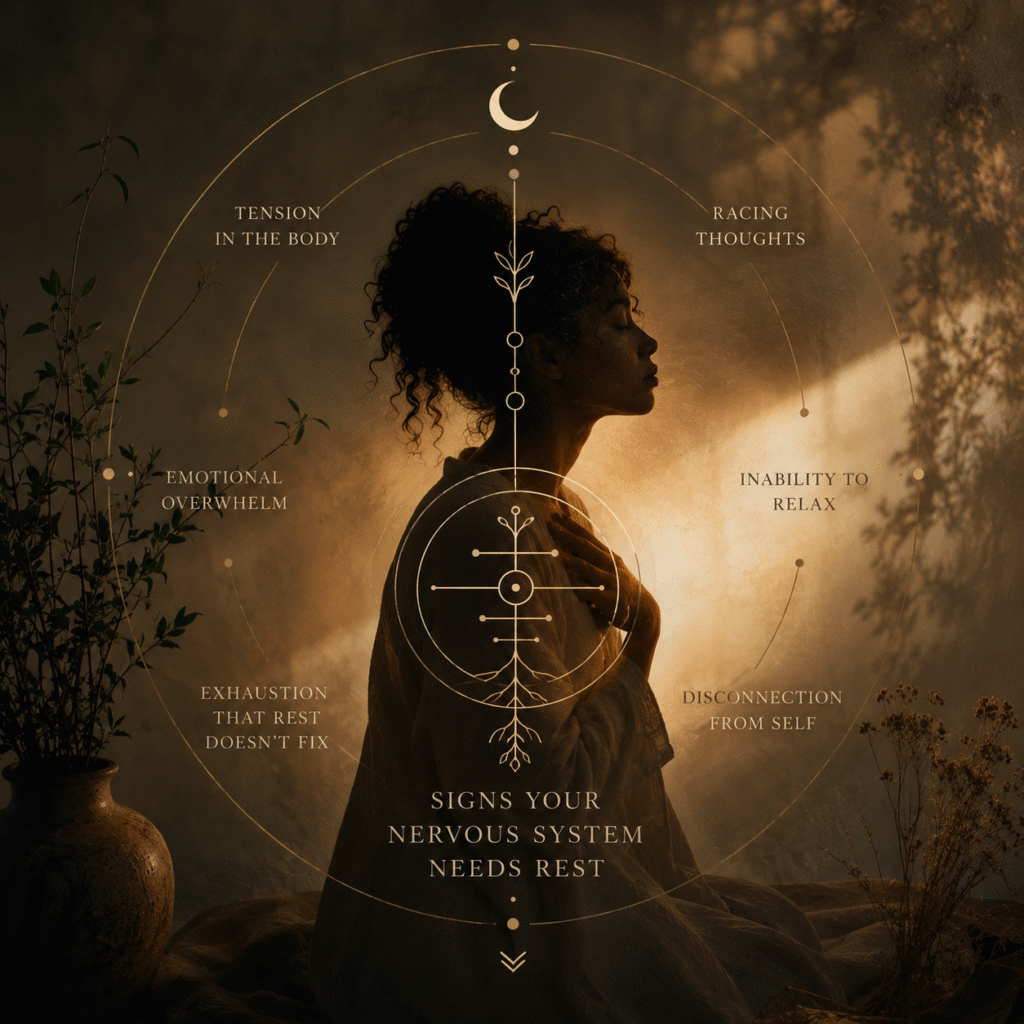
Modern life often celebrates productivity, resilience, and the ability to keep going no matter what. But your body speaks a different language. Long before burnout arrives, your nervous system begins sending subtle signals that it needs time to recover.
Learning to recognise the signs your nervous system needs rest can help you respond before chronic stress affects your emotional wellbeing, relationships, and physical health. Rest is not something that has to be earned—it is one of the ways your body repairs itself.
What Happens When Your Nervous System Is Overloaded?
Your nervous system constantly monitors your environment, deciding whether you are safe enough to relax or whether you need to stay alert.
When stress becomes constant, your body may remain in survival mode for days, weeks, or even months. Instead of returning to a calm, balanced state, your nervous system stays switched on.
This doesn’t always feel dramatic. Sometimes it simply feels like being tired all the time, emotionally flat, or unable to truly relax, even during quiet moments.
If these experiences sound familiar, they may be some of the signs your nervous system needs rest rather than signs that you simply need to “try harder.”
7 Signs Your Nervous System Needs Rest
1. You Feel Tired Even After Sleeping
One of the earliest signs is waking up feeling as exhausted as when you went to bed.
Your body may be sleeping, but if your nervous system remains activated throughout the night, your sleep is often less restorative.
If this sounds familiar, you may also enjoy our guide: Why You’re Always Tired Even After Sleeping, where we explore why exhaustion isn’t always solved by more hours in bed.
2. Small Problems Feel Overwhelming
When your nervous system is overloaded, your emotional capacity often shrinks.
Minor inconveniences can suddenly feel enormous. A delayed email, unexpected phone call, or small disagreement may trigger far more stress than the situation deserves.
This doesn’t mean you’re weak. It often means your internal resources are already depleted.
Signs Your Nervous System Needs Rest That People Often Ignore
Many people overlook the quieter symptoms because they don’t seem serious enough to deserve attention.
These include:
- Difficulty concentrating
- Feeling emotionally numb
- Forgetfulness
- Constant muscle tension
- Clenching your jaw
- Frequent headaches
- Digestive discomfort
- Feeling restless even when sitting still
- Difficulty switching off at night
These subtle experiences often appear long before complete burnout.
3. You Can’t Truly Relax
Have you ever sat down to rest but immediately reached for your phone, checked your emails, or started thinking about tomorrow?
Many people discover they have forgotten how to simply be.
When your nervous system spends long periods in survival mode, stillness can actually feel uncomfortable.
Learning to rest becomes a skill that needs rebuilding rather than something that happens automatically.
4. Your Body Feels Tight
Stress isn’t stored only in your thoughts.
Many people notice persistent tightness across the shoulders, neck, jaw, chest, hips, or lower back.
This tension is often your body’s way of staying prepared for danger, even when no immediate threat exists.
Gentle stretching, slow breathing, walking in nature, or quiet evenings can help signal safety to the nervous system.
5. Everything Feels Like Effort
Tasks that once felt simple suddenly require enormous mental energy.
Making decisions.
Replying to messages.
Cooking dinner.
Even getting out of bed can feel heavier than usual.
This type of fatigue is often emotional and neurological rather than physical.
Signs Your Nervous System Needs Rest Before Burnout Develops
Burnout rarely happens overnight.
Instead, the body whispers before it starts shouting.
Recognising the signs your nervous system needs rest early allows you to make small changes before reaching complete exhaustion.
These changes don’t have to be dramatic.
They might include:
- Going to bed slightly earlier.
- Spending ten minutes outside each day.
- Drinking less caffeine.
- Turning off notifications during the evening.
- Creating gentle bedtime rituals.
- Allowing yourself moments of quiet without guilt.
Small daily practices often have a greater long-term impact than occasional dramatic resets.
If you’re looking for practical ideas, you may enjoy reading our article on Evening Habits for Better Sleep, which explores simple routines that support deeper rest and recovery.
6. You Feel Disconnected From Yourself
Sometimes the greatest sign isn’t anxiety.
It’s emptiness.
You may continue functioning at work, looking after your family, and completing daily responsibilities while feeling strangely disconnected from your own emotions.
This emotional distance often develops when the nervous system has been working hard for too long.
Rest helps create the space where connection gradually returns.
7. You’re Always Waiting for the Next Problem
Many people living with chronic stress become experts at anticipating what could go wrong.
Even peaceful moments feel temporary.
Instead of enjoying the present, the mind scans constantly for the next difficulty.
This heightened vigilance is another way the nervous system attempts to protect you.
The good news is that nervous systems are adaptable.
With consistent rest, safety, and compassionate routines, they can slowly learn that not every moment requires survival mode.
Rest Is More Than Sleep
When people hear the word rest, they often think only about sleeping.
But true restoration can include many different experiences:
- Quiet walks
- Reading without distraction
- Gentle movement
- Deep breathing
- Time in nature
- Warm baths
- Herbal tea
- Meaningful conversation
- Creative hobbies
- Moments without screens
The goal is not perfection.
It is giving your nervous system regular opportunities to remember what safety feels like.
Final Thoughts
Your body is constantly communicating with you.
Learning to recognise the signs your nervous system needs rest is an act of listening rather than fixing.
You do not need to wait until you completely burn out before slowing down.
Sometimes the smallest changes—a calmer evening, deeper breathing, or allowing yourself permission to pause—become the beginning of healing.
Rest is not the opposite of productivity.
It is one of the foundations that allows you to continue living with greater clarity, resilience, and wellbeing.
