
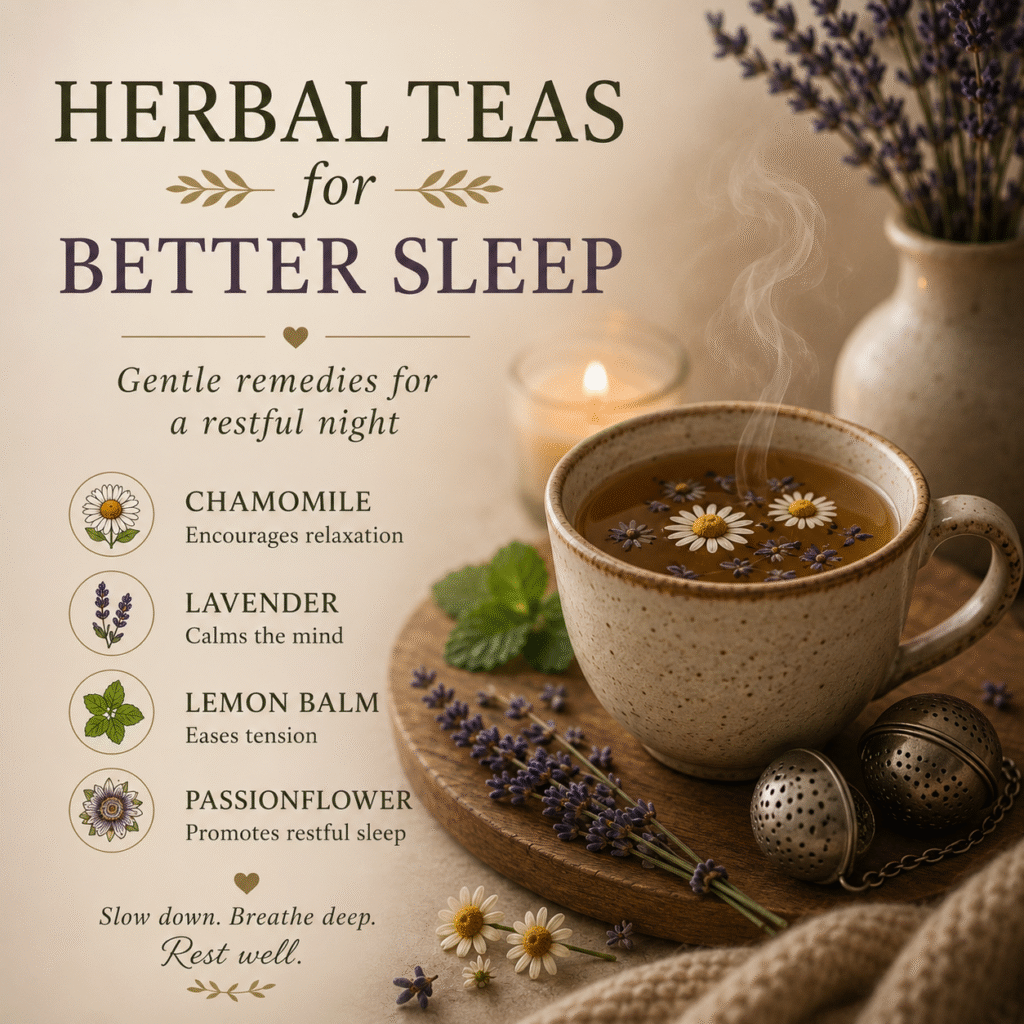
There is something deeply comforting about ending the day with a warm cup of herbal tea. Long before screens, endless notifications, and busy schedules filled our evenings, people turned to plants to help them unwind, soothe the mind, and prepare for restful sleep. Today, many people are rediscovering the quiet ritual of herbal teas for better sleep, not simply as a drink, but as an invitation to slow down.
While no single tea is a cure for persistent sleep problems, certain herbs have been traditionally used for centuries to encourage relaxation and support healthy sleep patterns. Combined with a calming evening routine, they can become a gentle way of signalling to your body that it is time to rest.
Why herbal teas can help you unwind
Sleep is influenced by much more than how tired we feel.
Stress.
Anxiety.
Busy minds.
Late-night scrolling.
Caffeine.
Irregular routines.
All of these can make it difficult to drift into restful sleep.
One reason many people enjoy herbal teas for better sleep is because they encourage an intentional pause.
Making tea asks you to slow down.
To boil the kettle.
To wait.
To breathe in the aroma.
To sit quietly for a few moments before bed.
Sometimes the ritual itself becomes just as beneficial as the herbs inside the cup.
1. Chamomile Tea
Chamomile is perhaps the most well-known herbal tea associated with sleep.
Its delicate floral flavour has made it a favourite bedtime drink around the world.
Many people find chamomile calming because it encourages relaxation after a busy day. Although everyone’s experience is different, drinking a warm cup 30–60 minutes before bed has become part of many people’s evening routine.
Chamomile is naturally caffeine-free, making it a good alternative to black tea or coffee in the evening.
2. Lavender Tea
The calming scent of lavender is familiar to many people through essential oils, but lavender can also be enjoyed as a tea.
Its floral aroma may help create a peaceful atmosphere before bed, particularly when combined with other calming habits such as reading, journalling, or reducing screen time.
Many people enjoy blending lavender with chamomile for a softer flavour.
3. Lemon Balm Tea
Lemon balm belongs to the mint family and has been valued in traditional herbal practices for generations.
Its fresh, citrus-like flavour makes it an enjoyable evening tea, while many people appreciate its naturally calming qualities.
If your evenings often feel rushed or mentally busy, lemon balm may become a pleasant addition to your bedtime routine.
4. Passionflower Tea
Passionflower has been used traditionally to encourage relaxation and emotional calm.
Although its flavour is milder than some herbal teas, it is often included in blends designed to support sleep and relaxation.
Some people enjoy combining passionflower with chamomile or lemon balm to create a balanced bedtime tea.
5. Valerian Root Tea
Valerian root has a long history of traditional use as a sleep-supporting herb.
Its earthy aroma is stronger than many other herbal teas, which means it isn’t everyone’s favourite flavour.
However, it remains one of the most recognised herbs included in natural sleep blends.
If you decide to try valerian, it is sensible to begin with a small amount and speak with a healthcare professional if you are pregnant, breastfeeding, taking medication, or have any health concerns.
Creating an evening ritual
The most effective herbal teas for better sleep are often supported by healthy evening habits.
Instead of thinking of tea as a quick fix, consider creating a bedtime ritual.
You might:
- Turn off bright screens an hour before bed.
- Dim the lights around your home.
- Read a few pages of a book.
- Listen to calming music.
- Write down tomorrow’s tasks to clear your mind.
- Sip your tea slowly without distractions.
These simple practices help your nervous system recognise that the day is coming to a close.
Over time, your evening cup of tea may become less about the drink itself and more about the sense of calm it represents.
Choosing the best herbal teas for better sleep
With so many herbal blends available, it can be difficult to know where to begin. The good news is that you don’t need an expensive collection of teas to create a calming bedtime routine.
Look for naturally caffeine-free blends that contain herbs traditionally associated with relaxation, such as chamomile, lemon balm, lavender, passionflower, or valerian root.
Whenever possible, choose high-quality loose-leaf teas or reputable herbal tea brands with simple ingredient lists. Many blends contain artificial flavourings or added sweeteners that may distract from the natural qualities of the herbs.
Remember that herbal teas for better sleep are not about finding a miracle cure. They work best as part of an evening ritual that supports your body and mind in preparing for rest.
6. Peppermint Tea
Peppermint tea is best known for supporting digestion, but many people also enjoy it as a soothing evening drink.
Its refreshing flavour can be especially comforting after dinner, particularly if a heavy meal has left you feeling uncomfortable before bedtime.
Although peppermint is not traditionally considered a sleep herb in the same way as chamomile or valerian, feeling physically comfortable can make it easier to settle into a restful night.
7. Rooibos Tea
Rooibos is naturally caffeine-free and rich in antioxidants, making it an excellent evening alternative to black tea.
Its naturally smooth, slightly sweet flavour means many people enjoy it without needing sugar or milk.
For those looking to reduce caffeine while still enjoying the comfort of a warm drink, rooibos can become a wonderful part of a relaxing bedtime routine.
A few gentle reminders
While many people enjoy herbal teas for better sleep, they are not suitable for everyone.
Some herbs may interact with medications or may not be recommended during pregnancy or for certain medical conditions.
If you have any concerns about using herbal remedies, speak with your doctor, pharmacist, or another qualified healthcare professional before introducing a new herbal tea into your routine.
It’s also worth remembering that ongoing sleep difficulties deserve attention. If you’re regularly struggling to sleep despite making healthy lifestyle changes, seeking professional advice can help identify any underlying causes.
Sleep is about more than what you drink
The best sleep routines rarely depend on one single habit.
Instead, they are built from many small choices repeated consistently.
Going to bed at a similar time each evening.
Reducing caffeine later in the day.
Creating a calm bedroom environment.
Limiting bright screens before bed.
Making space to unwind instead of carrying the day’s worries straight into bed.
A warm cup of tea can become part of that rhythm.
Not because it forces sleep to happen, but because it gently reminds both your body and your mind that the day is drawing to a close.
Many readers who have connected with my reflection, The Tiredness Sleep Can’t Fix, discover that rest isn’t only about sleeping longer. Sometimes emotional exhaustion also asks for kindness, reflection, and space to recover.
If you’ve also found yourself constantly busy, you may enjoy reading Being Busy but Not Fulfilled: The Difference Between Filling Your Days and Truly Living Them, which explores how slowing the pace of life can help us reconnect with ourselves.
A final cup of calm
In a world that often encourages us to move faster, using herbal teas for better sleep offers something surprisingly simple: permission to slow down.
Perhaps that is why the ritual feels so meaningful.
Not because the tea solves every restless night.
But because, for a few quiet minutes, you step away from the demands of the day and offer yourself care.
Sometimes healing begins with dramatic change.
Sometimes it begins with something as ordinary as holding a warm cup between your hands and allowing yourself to pause.
Whether your favourite is chamomile, lavender, lemon balm, passionflower, peppermint, or rooibos, may your evening tea become more than a drink.
May it become a gentle reminder that rest is not something you have to earn.
It is something every human being deserves.
