
There are few things in life more restorative than a good night’s sleep.
When we sleep well, we wake with more clarity, patience and energy. Our thoughts feel lighter, our emotions become easier to navigate and even ordinary tasks require less effort. Yet for many people, deep rest feels increasingly difficult to find.
Modern life constantly asks us to remain alert. Notifications, deadlines, responsibilities and endless streams of information keep the nervous system active long after the day has ended. Even when the body lies down, the mind often continues running.
If you’ve ever found yourself exhausted yet unable to sleep, you’re certainly not alone.
The encouraging news is that better sleep is not simply about forcing yourself to close your eyes. It begins by creating the conditions that allow both the mind and body to gently let go.
Why Sleep Matters So Much
Sleep is not wasted time.
It is one of the most important healing processes your body experiences every single day.
During sleep your body works quietly to:
- Restore physical energy
- Support your immune system
- Process memories and emotions
- Balance hormones
- Reduce stress
- Repair muscles and tissues
- Improve concentration and creativity
When sleep becomes disrupted for weeks or months, every area of life can begin to feel heavier.
You may notice:
- Constant fatigue
- Increased anxiety
- Difficulty concentrating
- Low motivation
- Irritability
- Brain fog
- Feeling emotionally overwhelmed
- Lack of joy in activities you once enjoyed
Many people assume these are simply personality traits or signs that something is wrong with them.
Often, they are signs that the body is simply asking for rest.
Sleep Is More Than Closing Your Eyes
Many people spend eight hours in bed yet wake feeling as tired as when they lay down.
Why?
Because sleep isn’t only physical.
Your nervous system also needs permission to relax.
If your mind is replaying conversations…
Planning tomorrow…
Worrying about the future…
Or carrying yesterday’s stress…
Your body remains partially on alert.
True rest begins when your entire system starts to feel safe enough to release the day.
This is why creating a calming evening routine can make such a difference.
Simple Ways to Improve Your Sleep
You don’t need an elaborate routine.
Small, consistent habits often have the greatest impact.
Consider trying a few of these gentle practices:
Dim the lights
Lower lighting naturally signals to your brain that it’s time to slow down.
Warm, softer light encourages the production of melatonin—the hormone associated with sleep.
Put your phone away earlier
Scrolling through social media or checking emails keeps the brain stimulated.
Even fifteen to thirty minutes without screens before bed can help your mind settle.
Slow your breathing
Deep, gentle breathing tells your nervous system that it is safe.
Try inhaling slowly through your nose and allowing each exhale to become slightly longer than your inhale.
Create a peaceful environment
A tidy room, comfortable bedding and a quiet atmosphere all contribute to better rest.
Small details matter more than we often realise.
Be kind to yourself
Many people become frustrated because they cannot fall asleep.
Ironically, the pressure to sleep often creates more wakefulness.
Instead of fighting the moment, simply allow yourself permission to rest.
Even quiet rest has value.
Your Mind Needs Rest Too
One of the biggest obstacles to good sleep is mental noise.
Our minds collect hundreds of thoughts throughout the day.
Without intentionally slowing down, they often continue circulating long into the evening.
Gentle meditation, calming music, breathing exercises or guided relaxation can help interrupt this cycle.
These practices don’t force sleep.
Instead, they create the conditions where sleep naturally becomes more likely.
Rest Is Not Laziness
Many people carry guilt around rest.
We celebrate productivity, achievement and constant movement.
Yet nature doesn’t operate this way.
The seasons change.
The tides rise and fall.
Day becomes night.
Everything in life follows rhythms of activity and restoration.
Human beings are no different.
Rest is not the opposite of productivity.
It is what makes sustainable productivity possible.
Without adequate rest, even simple tasks become exhausting.
With proper restoration, creativity, focus and emotional resilience naturally begin to return.
Finding Your Way Back to Rest
Improving sleep rarely happens overnight.
Like any healthy habit, it develops through small, gentle choices repeated consistently.
Some evenings will feel easier than others.
That’s perfectly normal.
The goal isn’t perfection.
The goal is creating a rhythm that helps your mind and body remember what safety feels like.
Over time, those small moments of intentional slowing down begin to add up.
One peaceful evening becomes another.
One restful night becomes several.
Gradually, sleep stops feeling like something you have to chase.
Instead, it becomes something you gently welcome.
A Gentle Gift for You
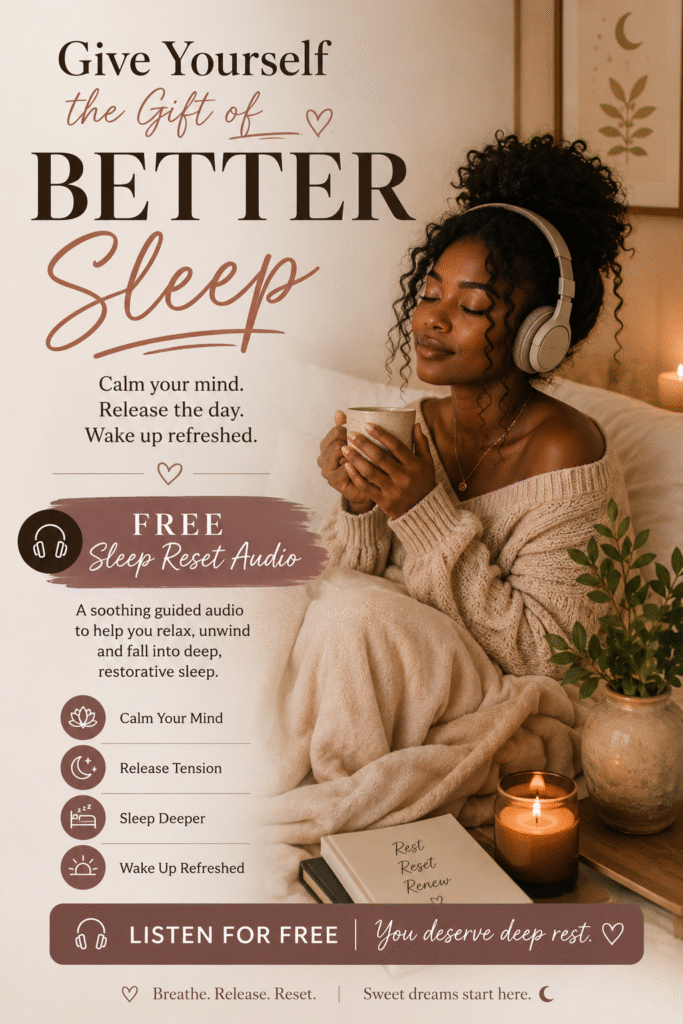
If your mind feels busy at bedtime, or you struggle to switch off after a long day, I’ve created something to support you.
The Free Sleep Reset Audio is a calming guided audio designed to help you slow your breathing, quiet mental noise and prepare your body for deep, restorative rest.
Rather than trying to force sleep, it gently encourages your nervous system to unwind, allowing you to settle naturally into relaxation.
Whether you’ve had a stressful day, struggle with racing thoughts, or simply want a more peaceful bedtime routine, this audio is here to accompany you.
Take a few quiet moments, put on your headphones, find a comfortable place to rest, and simply listen.
Sometimes the greatest act of self-care isn’t doing more.
It’s allowing yourself permission to rest.
