
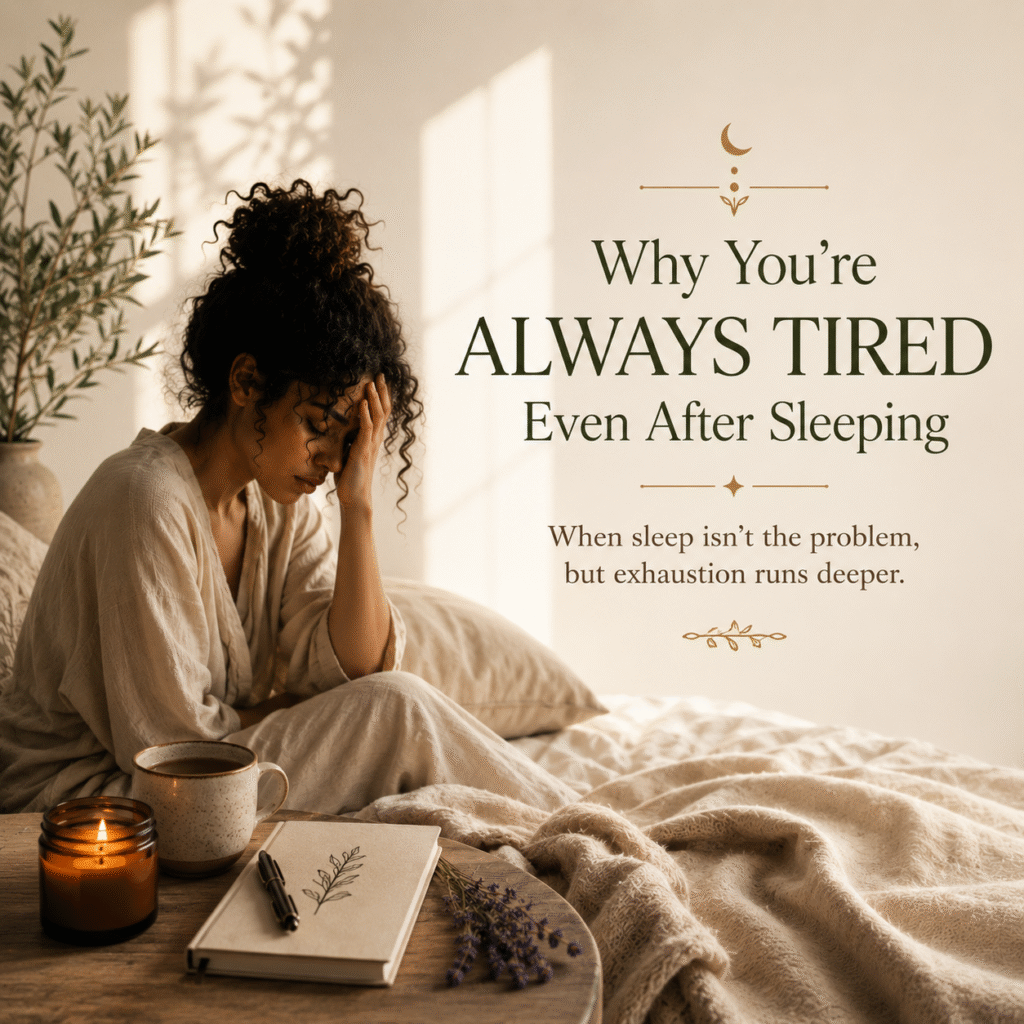
There are few things more frustrating than waking up after what should have been a full night’s sleep, only to feel just as exhausted as you did the day before. If you’ve ever wondered why you are tired even after sleeping, you’re certainly not alone.
Many people assume that feeling exhausted must simply mean they need more hours in bed. Yet for countless people, the issue isn’t the amount of sleep they’re getting—it’s the quality of their rest, the demands placed upon their minds, and the hidden weight they carry every day.
True restoration is about far more than closing your eyes for eight hours. It is about allowing your body, mind, and emotions the opportunity to recover.
Sleep Doesn’t Always Equal Rest
Modern life often teaches us to measure recovery by numbers.
Eight hours of sleep.
Ten thousand steps.
Two litres of water.
While these habits can certainly support wellbeing, they don’t always address the deeper reasons someone may feel tired even after sleeping.
Imagine trying to recharge your phone while dozens of apps continue running in the background. Even though it remains plugged in overnight, the battery never quite reaches full capacity because energy is constantly being used.
People are remarkably similar.
Stress, worry, unresolved emotions, constant stimulation, and mental overload continue draining us long after we have climbed into bed.
Our bodies may appear still, but our nervous systems can remain switched on.
Hidden Exhaustion Can Follow You Into the Night
Exhaustion isn’t always physical.
Sometimes the greatest source of fatigue comes from carrying responsibilities that cannot be seen.
Looking after everyone else.
Suppressing difficult emotions.
Trying to meet impossible expectations.
Constantly overthinking.
Feeling unable to truly switch off.
This hidden emotional load often follows us into sleep.
Our minds continue processing unfinished conversations, future worries, work pressures, financial concerns, or emotional pain. Even when we sleep, our bodies may never fully enter the deep restorative state they desperately need.
This is why someone can wake feeling just as drained as when they went to bed.
Your Nervous System May Never Truly Relax
One of the most overlooked reasons people remain exhausted is an overstimulated nervous system.
Many of us spend our days moving rapidly between emails, social media, work demands, family responsibilities, and endless notifications.
Our brains rarely experience genuine quiet.
By bedtime, we expect ourselves to instantly relax simply because we’ve turned the lights off.
But our nervous system doesn’t operate like a light switch.
It responds gradually to safety, stillness, and consistency.
Creating small evening rituals—such as reducing screen time, dimming lights, drinking herbal tea, reading quietly, or practising gentle breathing—can help signal to your body that it is finally safe to rest.
These simple habits may appear insignificant, but over time they create powerful changes.
Emotional Fatigue Often Looks Like Physical Tiredness
Emotional exhaustion is remarkably good at disguising itself.
You may believe you simply need more sleep when what you actually need is space to process your emotions.
Perhaps you’ve been strong for everyone else.
Perhaps you’ve ignored your own needs for months or even years.
Perhaps you’ve become so accustomed to functioning while exhausted that you’ve forgotten what genuine energy feels like.
When people remain emotionally overloaded for long periods, they often become tired even after sleeping, because sleep alone cannot resolve emotional depletion.
Healing requires more than rest.
It requires honesty.
Compassion.
Boundaries.
And permission to slow down.
The Quality of Your Evening Matters
Many people focus entirely on what happens during sleep, while overlooking what happens before it.
Your evening routine prepares your body for the night ahead.
Simple habits can make a remarkable difference:
- Reduce bright screens before bed.
- Drink a calming herbal tea.
- Read something peaceful instead of scrolling.
- Write down tomorrow’s worries in a journal.
- Keep your bedroom cool and quiet.
- Allow yourself a few minutes of complete stillness.
These practices gently encourage your body to transition from activity into recovery.
If you’re looking for natural ways to support your evenings, you may enjoy reading Herbal Teas for Better Sleep, where we explore calming herbal blends that can become part of a relaxing bedtime ritual.
Rest Is More Than Sleep
One of the greatest misunderstandings about wellbeing is believing that sleep is our only source of recovery.
In reality, humans need many different forms of rest.
Physical rest.
Mental rest.
Emotional rest.
Creative rest.
Spiritual rest.
Social rest.
You may sleep for eight hours, yet still wake depleted because one or more of these areas has been neglected.
Perhaps your body slept while your mind never stopped thinking.
Perhaps your muscles relaxed while your emotions remained tense.
Real restoration comes when we begin nourishing every part of ourselves rather than focusing on sleep alone.
Learning to Listen Instead of Push
When we feel exhausted, our first instinct is often to push harder.
Another coffee.
Another task.
Another busy day.
Yet our bodies are often asking for the opposite.
They ask us to listen.
To notice.
To become curious rather than critical.
Fatigue is not always an enemy to overcome.
Sometimes it is a messenger inviting us to examine the pace at which we are living and the burdens we continue to carry.
When we learn to listen with kindness instead of frustration, our relationship with exhaustion begins to change.
A Gentler Way Forward
If you frequently feel tired even after sleeping, remember that your body may be asking for more than simply another hour in bed.
It may be asking for slower evenings.
Healthier boundaries.
Less constant stimulation.
Time in nature.
Meaningful conversations.
Quiet moments without distraction.
Or simply permission to stop carrying everything alone.
Healing rarely happens overnight.
It unfolds through small choices repeated consistently.
Each gentle evening ritual, each moment of stillness, and each act of self-compassion becomes another step towards deeper restoration.
Sleep is important, but true rest begins long before your head touches the pillow. By caring for your emotional wellbeing as much as your physical health, you create the conditions for genuine renewal—allowing yourself not only to sleep, but to truly recover.
